WP Umbrella’s Performance and Uptime Monitoring helps you keep an eye on your website’s health and speed. 🚀 In this article, we’ve compiled frequently asked questions to help you better understand how to set up and manage performance monitoring, adjust monitoring settings, and troubleshoot common issues.
Estimated Time to Complete: 5 minutes
Prerequisites:
An active WP Umbrella account
WP Umbrella plugin installed on your WordPress site
Here are answers to the most common questions about WP Umbrella's performance and uptime monitoring features:
WP Umbrella automatically refreshes your website’s Google PageSpeed Score every 5 days to help you track and optimize performance. User’s can manually request a re-scan every 24 hours.
➡ We run Google Lighthouse performance tests from WP Umbrella’s own infrastructure.
The tests follow the same methodology as Google PageSpeed Insights but are executed from our servers.
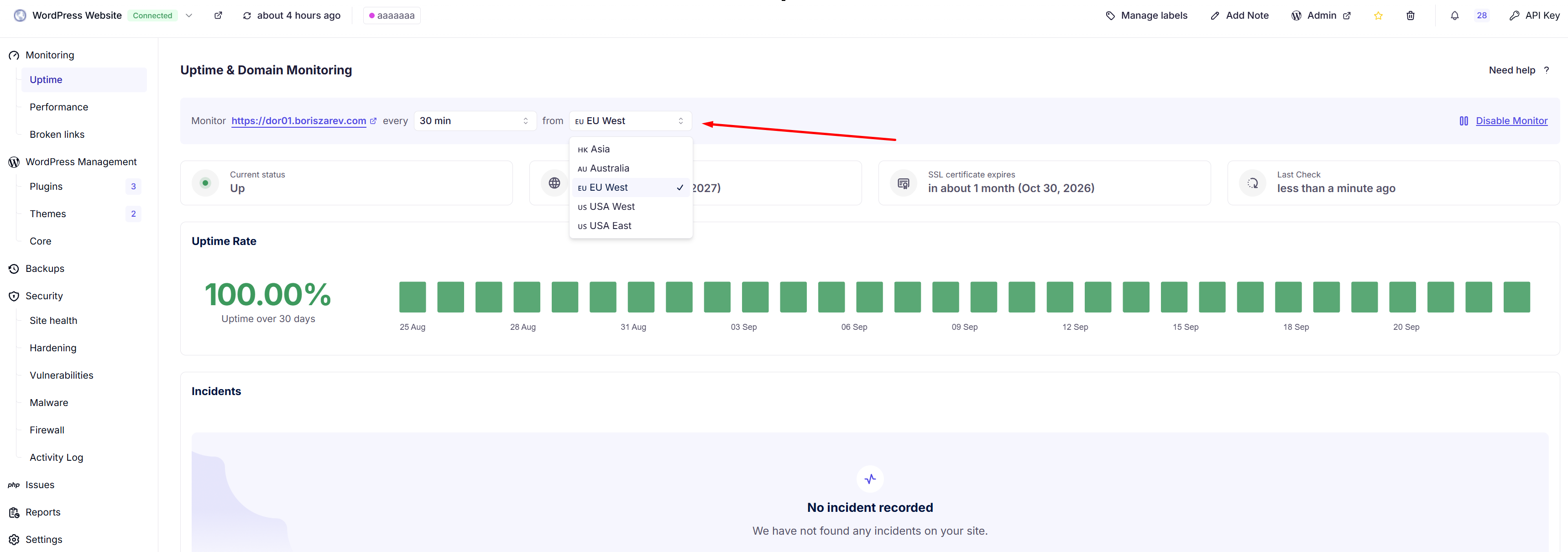
Click on your website Uptime monitor tab and from there it can be easily adjusted.
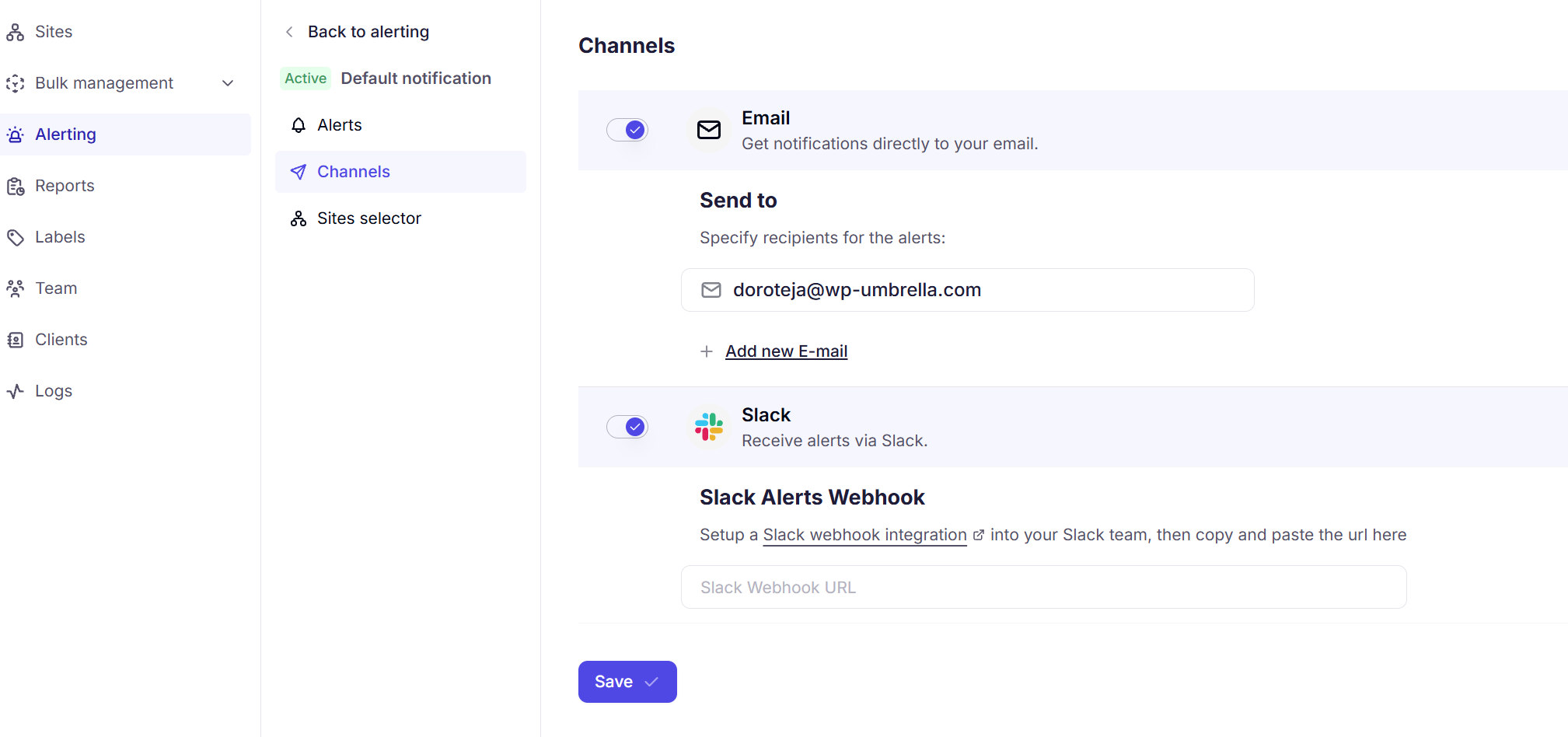
Absolutely! 🙌 WP Umbrella supports Slack notifications for downtime alerts. You’ll need to create an alert in the dashboard to enable them. Here’s how to create an alert.
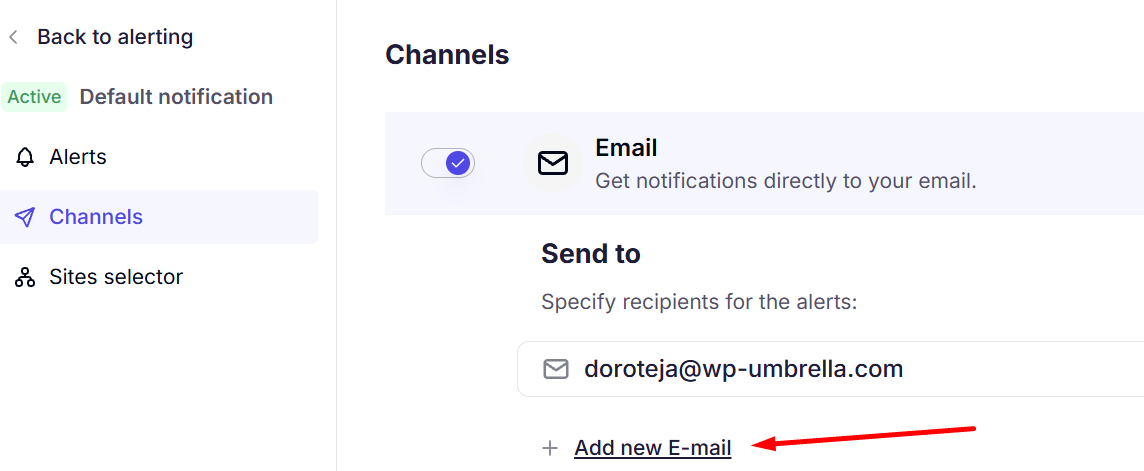
You can easily notify multiple recipients when downtime is detected:
Create an alert (same as for Slack notifications).
Add multiple email addresses or recipients within that alert.
WP Umbrella tracks important metrics that impact your site's performance and SEO:
Time to First Byte (TTFB)
First Contentful Paint (FCP)
Speed Index
Time to Interactive (TTI)
Core Web Vitals
Google PageSpeed Score
WP Umbrella runs the same Google Lighthouse performance tests, but they are executed from our own infrastructure.
Because of this, results can vary slightly compared to Google PageSpeed Insights. Differences may come from network conditions, server location, server response time, and the test environment at the moment the analysis is run.
These variations are normal and expected, as performance tests are real-time simulations rather than fixed measurements. If your score changes between tests, this is completely normal.
For more details, check out this article: Why Your PageSpeed Insights Score Varies (And Isn’t 100) 🔗
Right now, alerts for specific performance metrics are not available, but good news—it’s on our public roadmap! Stay tuned!
To get more accurate response time data, we recommend setting the monitoring frequency as low as possible (e.g., 2 minutes).
⚙ If the frequency is set to 30 minutes, there’s a higher chance of missing a cached response (a "cache HIT"), which means you might see inflated response times because the site wasn't served from the cache during the check.
Ensure you give it 24 hours once the site is added. We run automatic scans every 5 days, and manually you can re-scan your Performance check every 24 hours.
Yes! Just set up an alert and choose Slack or email notifications.
Of course! Simply go to the Settings section of your website in WP Umbrella and pick the nearest region.
Performance can vary due to server load, network traffic, or caching behavior. Monitoring more frequently can help you spot patterns.
Check your Monitoring tab to see the latest scans and results—everything is visible there.
We hope this FAQ clears up any questions you have about WP Umbrella’s Performance and Uptime Monitoring features. 🌐 Whether it’s tracking Google PageSpeed or setting up alerts, WP Umbrella is designed to give you peace of mind. If you still have questions or need help, our support team is always here to assist you! 💬
